What is the heat transfer principle of finned tubes
For many users of finned tubes, its heat transfer principle is unfamiliar to the machine. Next, we will follow the manufacturer of laser welded stainless steel finned tubes to make a detailed understanding.
The manufacturer of laser welded stainless steel finned tubes said that if you want to know the heat transfer principle of finned tubes, let's first know what the heat transfer coefficient is. The heat transfer coefficient refers to the heat transfer quantity per unit temperature difference and per unit heat transfer area, which can reflect the heat transfer capacity between the fluid and the wall.
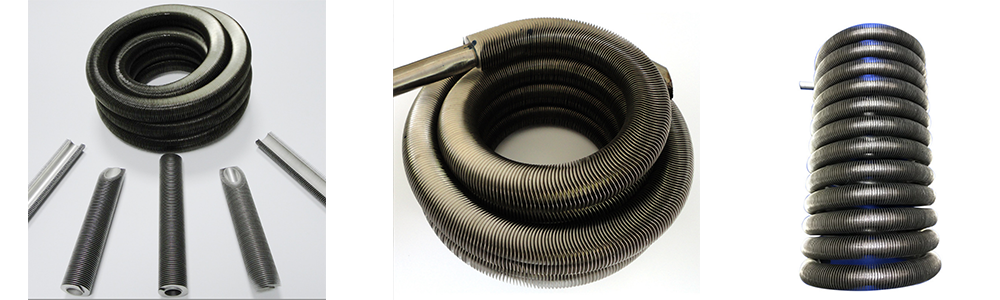
Finned tubes are heat exchangers composed of round tubes or smooth tubes. How can we improve the heat transfer of round tubes? One of the effective methods is to use an extended surface on the outer surface of the tube, namely the flue gas side, to make a finned tube. It is assumed that the actual heat transfer area of the finned tube is several times of the original surface area of the bare tube. Although the heat transfer coefficient of the flue gas is still very low, the heat transfer effect reflected in the surface area of the bare tube will be greatly increased, so that the entire heat transfer process will be enhanced. When the total heat transfer is appropriate, the metal consumption of the equipment will be reduced, and the economy will be improved.
Application Examples of Finned Tubes
(1) Heat pipe air preheater series
Application: absorb waste heat from flue gas and heat combustion supporting air to reduce fuel consumption and improve combustion conditions, so as to achieve the purpose of energy conservation; It can also absorb waste heat from flue gas for heating other gas media such as gas.
(2) Heat pipe economizer series
Application: Heat is absorbed from flue gas to heat water supply. The heated water can be returned to the boiler (as an economizer) or used alone (as a water heater), so as to improve energy utilization and achieve the purpose of energy conservation.
(3) Heat pipe waste heat boiler (evaporator) series
Application: Heat pipes are used as heat transfer elements to absorb the waste heat of flue gas with higher temperature to generate steam. The steam generated can be combined into the steam pipe network (to achieve the pipe network pressure), and can also be used for power generation (large steam volume and stable heat source) or other purposes.